“What are your goals?”
Sounds like simple question, doesn’t it? Families are asked this by every person they interact with throughout the process of losing a loved one (and recovering from it)
The problem is… when asked, most people don’t know yet.
And even if they do, they’re rarely the same as other family members.
Grief, ambiguity, assumptions, and individual preferences can collide early resulting in conflict and damaged relationships. Without clear, shared, and explicit goals working together on an estate can feel tense and overwhelming.
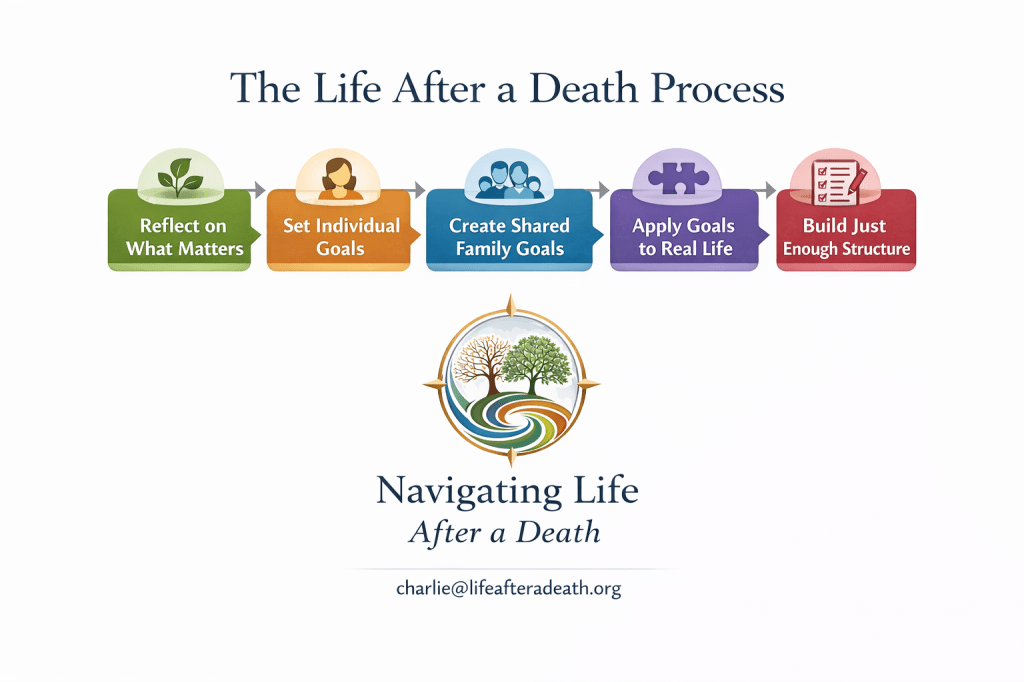
It doesn’t need to be this way. This is why Life After A Death has created a lightweight and structured approach to help families answer “What are your goals?” in a fair and effective way so that families can—practically and emotionally—stay connected to each other even if it means the process doesn’t get moving right away.
1. Reflect on What Matters
Before doing anything, slow down.
Each person takes time to reflect on:
- What matters most to them
- Their values
- What a “good outcome” would look like
This includes both:
- Practical hopes (what gets done)
- Emotional hopes (how it feels and what relationships look like)
You’re not trying to agree yet. You’re trying to understand.
2. Set Individual Goals
Each person defines a small number of personal goals.
Good goals are:
- Honest
- Specific
- Grounded in values
- Clear about tradeoffs
A simple format:
I want to ___, so that ___, even if it means ___.
These aren’t debated.
They’re made visible, so the family can support each other where possible.
3. Create Shared Family Goals
Now the family comes together.
Each person proposes what they believe the family should accomplish.
Then, together, you:
- Clarify what each goal means
- React honestly
- Improve the goals as a group
You don’t need perfect agreement.
The goal is “good enough to support,” not “perfect for everyone.”
4. Apply Goals to Real Life
Goals only matter if they shape real decisions.
As a family, you walk through key areas like:
- Finances
- Property and belongings
- Legal and estate process
- Sentimental items
- Communication and pacing
For each area, you ask:
- What does success look like here?
- What matters most?
- What can wait?
This is where clarity turns into direction.
5. Build Just Enough Structure
Once you’re aligned, you create a simple way to move forward.
That includes:
- Breaking work into manageable areas
- Assigning ownership (who leads what)
- Clarifying how decisions are made
- Agreeing on communication and pace
Not over-structured. Just enough to keep things moving and reduce tension.
What This Process Really Does
This isn’t just about getting things done.
It helps families:
- Reduce conflict
- Make better decisions
- Move at a sustainable pace
- Stay connected during a difficult time
And ultimately:
Feel proud of how they handled both the practical and emotional sides of the transition.
If you’d like help facilitating this process with your family:
 Helping Families Find a Positive Life After a Death
Leave a comment